"Let unity, the greatest good of all goods, be your preoccupation." - St. Ignatius of Antioch (Letter to St. Polycarp)

Saturday, November 14, 2009

Russian Orthodox Relations: a Warming and a Cooling


Rorate Caeli posted an article two days ago indicating a possible forthcoming meeting between Pope Benedict and Patriarch Kirill, the Patriarch of the Russian Orthodox Church. Yesterday the Telegraph published an article titled, "Russian Orthodox and Catholic Church may end 950-Year Rift." The article begins:

Relations between the Vatican and the Russian Orthodox Church have been tense for centuries, but in a sign that relations are finally thawing, Archbishop Ilarion, who heads the Russian Orthodox Church’s foreign relations department, said that both sides wanted a meeting, although he emphasised that problems remained.

Ilarion spoke of a rapprochement under Pope Benedict XVI that would allow for a meeting with the new Russian Orthodox Patriarch, Kiril, who took up his office in February after the death of the previous patriarch.

"There have been visits at a high level," said Illarion. "We are moving towards the moment when it will become possible to prepare a meeting between the Pope and the Moscow patriarch." (Continue reading)

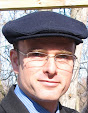
This comes after yesterday's news that the Russian Orthodox Church may sever relations with the German Evangelical Church over the latter's election of Margot Kassman (in the photo at right) as its bishop.

The Russian Orthodox Church may sever relations with the Evangelical Church in Germany (EKD), a major Protestant church of Western Europe that has elected a woman to chair the EKD's council.

The Orthodox clergy say this runs counter to evangelical principles. Analysts fear this could provoke a big inter-faith conflict.

Bishop Margot Kassmann, the first woman to lead the Evangelical Church in Germany, which unites some 24 million Protestants of more than 20 Lutheran and Reformed churches, was elected at the council's meeting on October 28. The 51-year-old bishop of Hanover is divorced and has four daughters.

"We plan to celebrate 50 years of dialog with the German Lutheran Church in late November and early December," Hilarion, the bishop of Volokolamsk and head of the Moscow patriarchy's external church relations department, said on Wednesday. "The celebrations will also mark the end of that dialog."

The Russian Orthodox Church does not accept female clergy. (Continue reading)

H/T: Koinonia, ByzTex, Ad Orientem.

Thursday, November 12, 2009

The Early Church Fathers on Scripture (Prof. Feingold lectures)


some_alt
Christ Appears to two Apostles on the way to Emmaus
Duccio Buoninsegna (1308-1311)
Dr. Lawrence Feingold of Ave Maria University recently presented two lectures on the early Church Fathers and Scripture, continuing his series of lectures sponsored by the Association of Hebrew Catholics, and devoted to the subject of the early Church Fathers. Last week's lecture was titled "The Early Church Fathers on the Authorship of the Four Gospels." The most recent lecture was titled "Patristic Exegesis: Biblical Typology." Both lectures can be downloaded as audio files (mp3) here. Or listen to them by pressing 'play' below. In the latter lecture he explained how the early Church Fathers understood Scripture to have a spiritual sense in addition to its literal sense. This spiritual sense could include an allegorical, moral, or eschatological meaning. He gave more detailed treatment to some of the writings of St. Melito (bishop of Sardis around AD 170) and of Origen.

Next Wednesday (November 18), Dr. Feingold will be giving a lecture titled "The Early Church Fathers on Mary as the New Eve." If you have questions about the subject of Mary as the new Eve, and you would like Dr. Feingold to address those questions during his lecture (or the Q&A following the lecture), please send them to me as soon as possible at my email address listed in my profile (lower left of this page), and I will forward them to him. A very helpful book on the subject of Mary in the Fathers is titled Mary and the Fathers of the Church: The Blessed Virgin in Patristic Thought, by Luigi Gambero.


Early Church Fathers on the Authorship of the Four Gospels


Q&A


Patristic Exegesis: Biblical Typology


Q&A


Friday, November 6, 2009

Is Sola Scriptura in the Bible? A Reply to R.C. Sproul Jr.


R.C. Sproul Jr. recently wrote a short article titled "Is Sola Scriptura in the Bible?" In light of our recent article treating the subject of sola scriptura, it might be helpful to examine Sproul's comments from a Catholic point of view. (Continue reading)

Tuesday, November 3, 2009

Solo Scriptura, Sola Scriptura, and the Question of Interpretive Authority


According to Keith Mathison, over the last one hundred and fifty years Evangelicalism has replaced sola scriptura, according to which Scripture is the only infallible ecclesial authority, with solo scriptura, the notion that Scripture is the only ecclesial authority. The direct implication of solo scriptura is that each person is his own ultimate interpretive authority. Solo scriptura is, according to Mathison, an unbiblical position; proponents of sola scriptura should uphold the claim that Scripture is the only infallible authority, but should repudiate any position according to which individual Christians are the ultimate arbiters of Scriptural truth. In this article Neal Judisch and I argue that there is no principled difference between sola scriptura and solo scriptura with respect to the holder of ultimate interpretive authority, and that a return to apostolic succession is the only way to avoid the untoward consequences to which both solo scriptura and sola scriptura lead. (Continue reading)

Monday, November 2, 2009

The Internet Monk Interview

I mentioned a few days ago that Michael Spencer (aka Internet Monk) had asked me to do an interview for his site. He is going to post the interview in five parts. He has already posted Part 1.

Especially over the last year or so Michael has been doing things that no other prominent Evangelicals (that I know of) are doing.  It might be called an honest and transparent self-examination of Evangelicalism, seeking to determine its strengths and its weaknesses, its identity and its future. He's not doing it to be critical, but to save it. The fascinating part of this endeavor, from my point of view, is that in seeking to understand and preserve Evangelicalism, Michael, in a sense, has flung open the doors to receive insight from other Christian traditions. And that has begun an ecumenical conversation. Such conversations can easily devolve into ugliness, especially on the internet. But Michael runs a tight ship, and so has fostered a safe context in which these discussions can take place. The result is often that Baptists and Lutherans and Calvinists and Catholics and Pentecostals and Orthodox and Anglicans are all talking to each other in a friendly, respectful way, about their theology and practice. In this respect, what Michael is doing ecumenically is pioneering. So I'm grateful for his invitation to contribute to the discussion.

UPDATE: Part 2 is posted.

UPDATE: Part 3 is posted.

UPDATE: Part 4 is posted.

UPDATE: Part 5 is posted.

UPDATE: Michael's response.

Saturday, October 31, 2009

If Luther had lived in our time . . .


... instead of doing this ...


... he might have used buses.


Bus_Slogan


BSG

Friday, October 30, 2009

A Parable for Philosophers


"Homer and Hesiod have ascribed to the gods all deeds
which among men are a reproach and a disgrace:
thieving, adultery, and deceiving one another."

 - Xenophanes, quoted by Sextus Empiricus in Against the Mathematicians.


There was once a religion whose adherents believed that God sometimes spoke falsehoods. One day a lover of wisdom came and rebuked them for believing this about God. They first replied by denying that they believed this about God. "We do not call it speaking falsehoods," they said, "We think of it as God's speech not being restricted to matching reality." The lover of wisdom replied, "If it were speaking falsehoods, what would be different about it?" They were silent, looking down anxiously and shuffling their feet. Finally, their high priest responded, speaking not to the wisdom lover, but to the others concerning the wisdom lover, saying, "The power of the a priori notion that God's speech must match reality is patent in him." The others all immediately looked relieved, and joined in patronizing derision of the wisdom lover. In response, the lover of wisdom walked away quietly. That evening he nailed the following notice to the door of their temple: "Here a god is feared; here no god is worshiped."

When the notice was discovered the people rioted, dragged the wisdom lover outside the city and picked up stones to kill him. "Why do you seek to kill me? he asked. "Because you falsely claimed that we do not worship God," they replied. The lover of wisdom looked intently at them and said, "If my speech did not match reality, then I have imitated the God you claim to worship, in which case you should praise me. But if I did not speak falsely, then why are you angry?" No one could answer him. The wisdom lover turned and walked through their midst toward the neighboring city, and no one touched him or said another word to him.

Thursday, October 29, 2009

The Early Church Fathers and Greek Philosophy (audio)


Professor Feingold (Ave Maria University), gave a lecture last night to the Association of Hebrew Catholics. His lecture was titled, "The Early Church Fathers and Greek Philosophy: St. Justin, St. Clement of Alexandria, and Origen." I think this was his best lecture so far in his series on the early Church Fathers. (Download the audio of last night's lecture and the Q&A following the lecture here.) He explained the different possible attitudes toward Greek philosophy, drawing from the writings of St. Justin, St. Clement of Alexandria (represented in the icon at right), and Origen. He also explained the difference between rationalism and fideism, showed why they are both errors, and how Catholicism avoids both errors. In addition he showed how Origen's misuse of philosophy led him into certain errors, and how Tertullian's rejection of philosophy led him into error. Both rationalism and fideism are common errors today among Christians. Rationalism requires that every mystery of the faith be verified by reason; fideism denies that philosophy has a role as handmaiden to theology. Professor Feingold also discussed the Church Fathers' understanding of the passage in Exodus regarding the plundering of the Egyptians on the night they departed from Egypt. In the last part of the lecture he discussed Pope Benedict's Regensburg Address on the relation of faith and reason, and the attempt by some to de-hellenize Christianity.

Tuesday, October 27, 2009

A Reply from a Romery Person


Last week as I was preparing to go out of town for a conference, I received an interview request from Michael Spencer (aka IMonk) regarding the recent announcement by the Vatican concerning the establishment of Personal Ordinariates. These Personal Ordinariates will allow former Anglicans to enter into full communion with the Catholic Church while retaining distinctive elements of Anglican "spiritual and liturgical patrimony." Among other things, Michael mentioned that he wanted to ask me some questions pertaining to a post titled "All the Romery People" authored by someone named JDK on a blog titled Mockingbird. I hadn't yet received the interview questions from Michael, so on the flight back to St. Louis, I wrote the following comments in response to JDK's "All the Romery People." (Continue reading)