"Let unity, the greatest good of all goods, be your preoccupation." - St. Ignatius of Antioch (Letter to St. Polycarp)

Sunday, September 27, 2009

Horton on being made "One Flesh with Christ"


At the West Coast Ligonier conference, Dr. Michael Horton was asked the following question:

"You said that we are not an extension of Christ’s kingdom. How does that cohere with our being the body of Christ? Our being the hands and feet of Christ, as it were?"

(Continue reading)

Wednesday, September 23, 2009

"I unite you to My Passion"


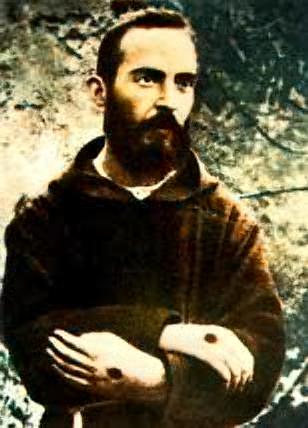
St. Padre Pio

I heard this voice: ‘I unite you to my Passion’. And immediately, the vision having disappeared, I came to and I saw these signs from which blood was flowing.  I did not have them before.” (Source)

Union with Christ is for us now a union with His Passion. "We are fellow heirs with Christ, if indeed we suffer with Him in order that we may also be glorified with Him." (Rom 8:17) Hence it follows that the union of Christ's followers, one with another, is perfected through suffering, even our suffering, joined to His. Stigmata are a sign to all Christians of the continuing presence of God with His Church, and of our call to lay aside our pride, and take up our cross. Our crosses and wounds are usually not extraordinary as were the stigmata of St. Padre Pio. But by dying to our own primacy, even in little ways, we find our true place in His Mystical Body under His Headship, and our true home in that eternal Kingdom. Only in so dying is our life given out to others, and Christ's through ours. Bearing the wounds of Christ is a great honor, as Peter recognized himself not worthy to be crucified upright as was the Lord. There is no greater humiliation in the eyes of men than death upon the cross of Christ, but no greater glory in the eternal life that awaits us, for those who share Christ's cross with Him. The dying one, through suffering, sees the end, and the End. For that reason he is quick to seek peace and make peace, because he sees himself with another on the way with him, together approaching the Judge. (Matt 5:25) This is now our opportunity as Christ's followers, to seek peace with one another, in charity and patience, yet with the urgency of those who know they are dying, and so have little time to give what they can. Christ came preaching peace to those who were far away and to those who were near. (Eph 2:17) What will our generation have suffered, and what we will have sacrificed, to bring the peace of reconciliation and reunion to those with whom we are on the way? What Christ said to St. Padre Pio, He says to us as His people: "I unite you to My Passion." While we have the opportunity, may we bear His cross for the joy that is set before us, despising the shame, to bring to others the peace He brought to the whole world, and especially to the household of faith.

St. Padre Pio, pray for us, that with God's help we may heal those wounds that separate Christ's followers, bearing them in ourselves instead.

Tuesday, September 22, 2009

Social Trinitarianism and the Catholic Faith


The Shield of the Trinity, informed by the Nicene Creed and the Athanasian Creed.

In his chapter titled “Social Trinity and Tritheism,” Cornelius Plantinga Jr., the current president of Calvin Theological Seminary, argues in support of what is known as ’social trinitarianism.’  This position is not compatible with the Catholic doctrine of the Trinity, so here I want to show the difference between the two positions, and why they are incompatible. (continue reading)

Sunday, September 20, 2009

Benedict XVI receives Orthodox Archbishop Hilarion


Optimistic comments earlier this week by the Most Rev. Paolo Pezzi, Catholic Archbishop of Moscow about the future of Catholic-Orthodox reunification elicited quite a 'buzz' in the blogosphere. A few days later, Orthodox Archbishop Hilarion, president of the Department for External Church Affairs of the Patriarchate of Moscow, arrived in Rome for a planned meeting with Pope Benedict.

Here is a selection from Archbishop Hilarion's speech in Rome delivered on Thursday, September 17.

We live in a de-Christianized world, in a time that some define—mistakenly—as post-Christian. Contemporary society, with its practical materialism and moral relativism, is a challenge to us all. The future of humanity depends on our response, as Christians, to this challenge, and maybe even whether life continues on our planet. It is a common challenge and also our answer must be common. Only together can we put forward all the spiritual and moral value of the Christian faith; only together can we offer our Christian vision for the family, only together can we affirm our concept of social justice, of a more equal distribution of goods.

These moral values are traditional because they have been affirmed by Christians for 20 centuries and have formed our cultural and European civilization. They are, at the same time, very new and modern, because the Gospel of Jesus is eternally new and modern. With this common challenge, the contemporary world challenges us, and we Christians must be together. It's time to pass from confrontation to solidarity, mutual respect, and esteem. I would say without hesitating that we must pass to mutual love, living out Jesus’s commandment to love one another. As Jesus said, all will know you are disciples of mine if you have love for the other. This is what our preaching demands and it can be effective, it can be convincing, also in our contemporary world, if we are able to live this mutual love among us as Christians. (my emphases)

Please continue to pray for the reconciliation and reunion of Orthodox, Protestants, and Catholics.

H/T: ByzTex

Saturday, September 19, 2009

Ecclesial Deism or Catholicism?


David Cloud provides an example of ecclesial deism when in "The Church Fathers, A Door To Rome," he writes:

"The fact is that the "early Fathers" were mostly heretics!"
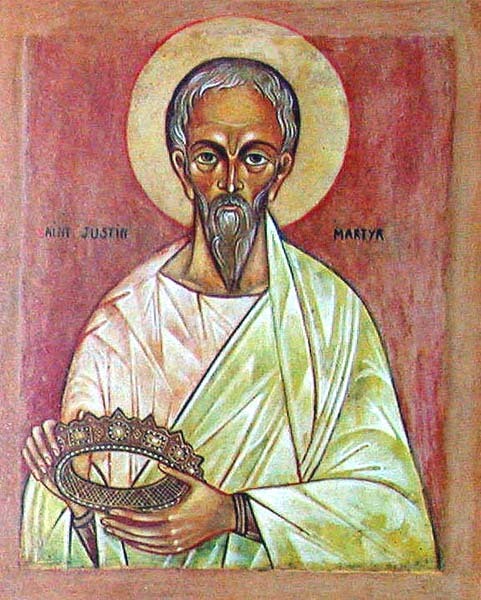
At what point does one's own disagreement with the early Church Fathers become evidence against one's own position, rather than an indication that the early Church Fathers were "mostly heretics"? St. Justin Martyr, born around the time that the Apostle John died, describes a Catholic mass in the video below, explaining in his Apology that they had received their belief and practice from the Apostles. St. Justin's testimony counts far more than does the testimony of a contemporary twenty-first century figure, precisely because of St. Justin's closer proximity to the Apostles. So claiming that the early Fathers were "mostly heretics" is in that respect self-refuting. But it is forthright and correct in its recognition of the distinctively Catholic nature of the early Church Fathers.


Wednesday, September 16, 2009

Why Protestantism has no “visible catholic Church”


St. Peter (c. 1708-13)
Pierre Etienne Monnot
San Giovanni in Laterano, Rome

Part of the content of the Christian faith is the "one, holy, catholic and apostolic Church," because that is one article of the Church’s Creed. Concerning the Church, the Westminster Confession of Faith reads:

The visible Church, which is also catholic or universal under the Gospel (not confined to one nation, as before under the law), consists of all those throughout the world that profess the true religion; and of their children: and is the kingdom of the Lord Jesus Christ, the house and family of God, out of which there is no ordinary possibility of salvation.
But, as I show below, Protestantism itself has no visible catholic Church. It has only denominations, congregations, believers and their children. Within Protestantism there is not some one additional entity to which the term “visible catholic Church” refers, consisting of these denominations, congregations, believers and their children.
(continue reading)

Saturday, September 12, 2009

Beckwith and George: Can You Be Catholic and Evangelical?


On September 3, Wheaton College hosted a friendly discussion between professors Timothy George and Francis Beckwith focused primarily on the following question: Can you be Catholic and Evangelical? Timothy George is a Southern Baptist and dean of Beeson Divinity School, and a co-signer of The Gift of Salvation. Francis Beckwith was the president of the Evangelical Theological Society when he reverted to the Catholic Church in 2006; he is now Professor of Philosophy & Church-State Studies at Baylor University. The video of the discussion and the following Q&A can be found here.

Such a discussion, and the way it was conducted, are very encouraging signs with respect to the goal of seeking the reunion of all Christians, especially Protestants and Catholics. In my opinion this event is exactly the sort of conversation Protestants and Catholics should be having. The discussion often just touched on various points of disagreement, without going into significant depth. But the purpose of the discussion was not to go into depth on these issues, only to sketch out the overall picture and develop a better mutual understanding of the common ground and the differences between Evangelicals and Catholics in relation to the question that titled the event.

My comments below focus only on Professor George’s statements. My purpose is to advance the discussion of our disagreements, by pointing to the deeper reasons underlying our disagreements.

(continue reading at Called To Communion)

Friday, September 4, 2009

Does the Bible Teach Sola Fide?


St. Paul Enthroned with Saints and Angels (c. 1360)
Unknown Italian Master
Collezione Vittorio Cini, Venice

One primary impediment to the reconciliation of Protestants and Catholics concerns the doctrine of justification. Protestants endorse justification by faith alone (sola fide), while the Council of Trent condemned justification by faith alone. (Session 6, Canon 9) The question I ask here is this: Is there any Biblical evidence for "justification by faith alone"? (continue reading)

Saturday, August 29, 2009

Supernatural Temperance in the Mystical Body


Ecclesial consumerism manifests itself more explicitly in certain sorts of doctrines. Health and Wealth is one of them; nobody wants suffering. Assurance is another such doctrine. Recently I participated in a few conversations about Catholic and Protestant conceptions of assurance. The most telling aspect of the conversations was that truth seemed to take second place to desireability. I heard words such as "like," "prefer," "attracted," "couldn't handle" and "frightful." The terms "truth" and "false" disappeared. Switch out the nouns, and I could have been listening to an order being placed at a fast-food 'drive-thru.' To be sure, if "once saved always saved" is the standard of security one has come to expect, then without a developed sense of the difference between mortal and venial sin, the possibility of losing one's salvation is frightening and therefore repugnant. But such a person can recognize that truth must remain his foremost objective, because a theology guaranteeing that salvation cannot be lost, if false, is giving false assurance and endangering his soul. Ecclesial consumerism, however, is not ultimately about conforming to divinely revealed truth, but about "happiness on prescription; isn't that the whole point of getting religion?"

If I were constructing my own personalized religion, I'd make sure it guaranteed health and wealth, prevented all suffering, discomfort, and minor annoyances, as well as granted indubitable assurance of my elect-to-glory status, and ensured that 'Church' would always be "fun" and not "boring." But I would be like an unsupervised child in a candy store, on the short road to diabetes. To become like a child, in relation to an omniscient and perfectly loving Father, means that we receive revelation from Him in trust and humility, not ordering it up as we like it. The difference between those two stances toward God is the difference between heaven and hell; this is precisely why ecclesial consumerism is no trifling matter. Made-to-order religion was the downfall of our first parents as they chose what seemed in their own eyes to be a delightful and desirable means to become truly happy like God. Jude Simpson, in the video above, plays a modern day Eve.

As I wrote elsewhere, ecclesial consumerism "turns things exactly upside-down, creating Church in our image, rather than conforming ourselves to the Church that Christ founded, and in doing so conforming to the image of Christ." We conform to Christ by conforming to His Body, the Church. I'm not speaking of some mere abstraction called "the catholic Church," some invisible mental construct to which anyone in schism can claim to be already united and already conformed. I'm speaking of the Catholic Church, headed by the two hundred and sixty-fifth successor of that one Apostle to whom Christ the God-Man gave the keys of the Kingdom, that is, the Church.

Ecclesial consumerism also lies behind the divisions that now separate Christians into so many schisms. It operates not only on the demand side, but also on the supply side, feeding and enlarging the demand. The ecclesial consumerist is reluctant to acknowledge the logical implications of the myriad conflicting interpretations. These conflicting interpretations entail that a great many persons who claim to speak for God, cannot possibly be speaking for God. That is because God is one, and God cannot contradict Himself. These many persons are the demand side's self-accumulated ear-itchers in the Christian market of ear-itching. He who has ears to hear, let him hear, said Christ. But he who has ears to be itched, has forgotten what ears are for, exchanging the pursuit of truth for the pursuit of its concomitant pleasure. "God-Bearer" is fine, they say, but "Mother of God" gives offense to our ears. Talk of absolute assurance is delightful; talk about mortal sin is repugnant to our ears. And so on.

The unity that Christ wants His followers to have only comes through supernatural humility, through accepting in faith and trust the one divine message as explicated by the divinely authorized teacher, and the one divine life as offered to us by the divinely authorized priest. Mary the Second Eve, demonstrates this humility before God in her submission to divine authority: "be it done unto me according to thy will." She recognized the divine authority of the one whom God had sent to speak on His behalf. In Gethsemane Christ Himself demonstrates for us this humility before His Father. "Not my will but thine be done." As His human will conformed to His divine will, so our will as individuals must conform to the will of His Body, the Church. To take up our cross is to conform to His crucified Body.

For that reason, our pursuit of truth cannot limit itself to true interpretations of Scripture, but must also seek to discover the true Church, i.e. the very Church that Christ founded, and to which belongs the authoritative determination both of the canon and interpretation of Scripture. The same two stances that are the difference between heaven and hell, are manifested in our stance toward His Body, the Church. The same Apostle who learned that to persecute Christ's Body is to persecute Christ (Acts 9:4-5), understood that to give ourselves in service to His Body is to give ourselves in service to Him. St. Paul knew that if we love Christ, we will devote ourselves to building up His Body, the Church.

But how do we build up the Church in unity? Within the soul of the individual, according to Aquinas, the virtue of temperance restrains us from desires and pleasures contrary to reason. Furthermore, in Book IV of the Republic Plato describes the virtue of temperance at the level of society as a kind of harmony grounded in the agreement of each part of the society concerning who is the rightful ruler. Therefore because grace builds on nature, supernatural temperance within the Mystical Body can likewise be described rightly as a kind of harmony grounded in the agreement of each member concerning who has the primacy in magisterial authority. Supernatural temperance in the Body of Christ is the agreement of each member regarding who holds the keys of the Kingdom. In this way, supernatural temperance as a virtue of the Mystical Body restrains her members from the ecclesial desires and delights that are contrary to the divinely guided determinations and counsels of her visible head. Find the primacy in magisterial authority, and we find not only the antidote to ecclesial consumerism, but also the key to ecclesial unity, the principium unitatis (principle of unity). Building up the Church in unity through this supernatural virtue thus requires the pursuit of agreement among all Christians concerning who now holds those keys.

Video H/T: Energetic Processions

Sunday, August 9, 2009

A Catholic Reflection on the Meaning of Suffering


If God is all powerful, and truly seeks our good, then why does He allow bad things to happen to us? Why does God allow all the suffering we experience in this life, if He loves us and is all-powerful and all-knowing? What does the Catholic Church say about the meaning of suffering?

We believe in an all-loving, all-power God. Not only does all love come from God, but the Apostle John says that God is Love. And we know that genuine love seeks the good for the beloved. If you love someone, you want that person to have what is truly good for him, what truly and most perfectly makes him happy. But God loves us infinitely more than we love each other. Therefore we know that God wants us to have what is good for us, what truly makes us happy.

But that is just what makes the sufferings of this present life so odd, perplexing, even apparently contradictory. If God is all powerful, and truly seeks our good, then why does He allow all the suffering we experience in this life?

(Continue reading)